Why your feet smell (and the sock change that fixes it)
Why your feet smell explained simply, plus the sock change that helps most. Real science on sweat, bacteria and fibre choice for Australian feet.
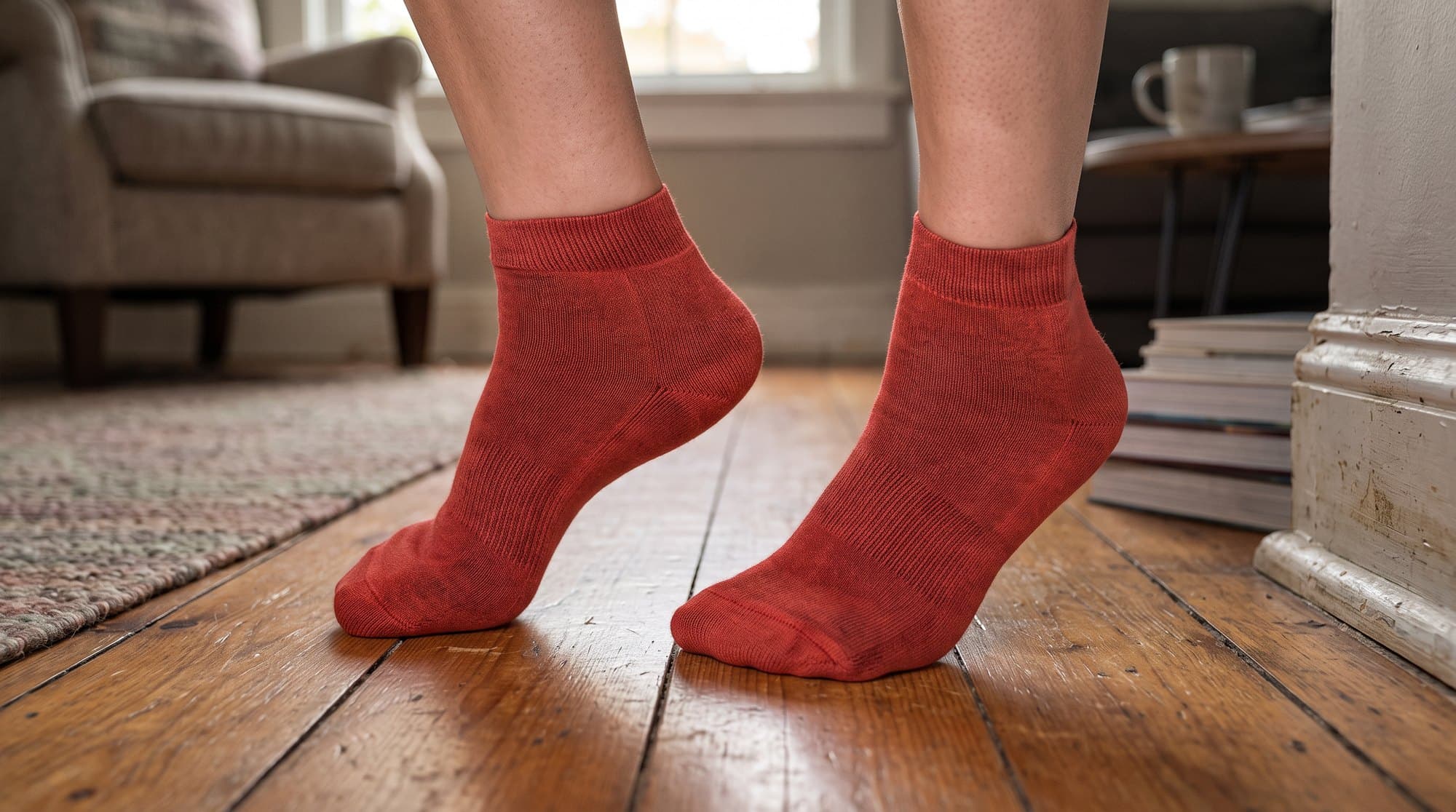
Your feet smell because bacteria on your skin break down sweat and dead skin cells, releasing isovaleric acid, the compound behind that sharp, sour odour. Sweat itself has almost no smell. The fix that works fastest: change into a fresh, breathable pair of socks partway through the day, especially if you are in closed shoes for work or school.
That is the short version. Here is what is actually going on, and why sock choice matters more than most people realise.
Why do feet smell so bad in the first place
Feet have more sweat glands per square centimetre than almost anywhere else on your body, close to 250,000 per foot. Combined with closed shoes, that creates a warm, humid microclimate that bacteria love.
The sweat itself is mostly water, salt and small amounts of amino acids. It does not smell. What smells is what bacteria do to it.
Skin bacteria, particularly Staphylococcus epidermidis, feed on sweat and dead skin, breaking down an amino acid called leucine into isovaleric acid (Figtree Podiatry). Humans can detect isovaleric acid at extremely low concentrations, which is why even a small bacterial colony can produce a smell that fills a room (ASM Education).
This condition even has a clinical name: bromodosis. It is common, not a sign that something is wrong with you.
What actually causes foot odour, and what helps each cause
Foot odour usually comes from a combination of factors, not just one. Here is a breakdown of the real drivers and what genuinely helps.
| Cause | Why it happens | What actually helps |
|---|---|---|
| Bacteria breaking down sweat | Skin bacteria convert sweat and dead skin into isovaleric acid, the main smell compound | Wash feet daily, dry between toes, change socks before bacteria build up |
| Closed, poorly ventilated shoes | Warm, humid conditions inside shoes let bacteria multiply faster | Rotate shoes so each pair dries out fully between wears, avoid same shoes two days running |
| Synthetic sock fibres | Hydrophobic fibres trap moisture against skin and give bacteria a surface to cling to | Choose breathable natural fibres that let moisture move away from skin |
| Long hours in one pair of socks | The longer sweat sits, the more time bacteria have to feed and multiply | A midday sock change, especially after gym or a hot commute |
| Naturally higher sweat gland activity | Some people, including teenagers and people on certain medications, simply sweat more | Moisture-wicking socks, breathable footwear, more frequent washing |
| Fungal infection (less common) | Fungi thrive in the same moist environment and can intensify odour | See a pharmacist or podiatrist if odour persists alongside itching or skin changes |

Does sock material actually change how much your feet smell
Yes, and this is where most of the daily difference happens. Synthetic fibres like polyester are hydrophobic, meaning they repel water rather than moving it away from skin. That keeps a damp layer sitting against your foot for longer, which is exactly the environment odour-causing bacteria need (Lumi Outdoors).
Natural fibres tend to manage moisture differently, allowing more of it to evaporate rather than pool. That single difference, less standing moisture, is the main reason people notice less odour when they switch away from synthetic blends.
We will be straightforward about bamboo here, because a lot of sock marketing overstates it. Bamboo does contain a natural compound sometimes called bamboo kun, and some brands claim this makes bamboo fabric antibacterial. The research does not clearly support that once bamboo goes through standard viscose processing: several studies have found the antibacterial effect is minimal, inconsistent, or not meaningfully different from other viscose fabrics once processed (MOSSRIVER).
What bamboo fabric does do reliably is breathe well and help manage moisture, which is the actual mechanism behind less odour, not bacteria being "killed" by the fabric. If a sock brand tells you their bamboo socks kill odour-causing bacteria, take that with a grain of salt. The honest claim is: better airflow, less trapped moisture, fewer ideal conditions for bacteria to multiply.
This is the same reasoning behind our guide on bamboo socks versus cotton, which goes further into how the two fibres behave differently against skin over a full day.
The sock change that actually fixes it
If you take one habit from this article, make it this: change your socks partway through the day, not just once every morning.
For most Australians in closed shoes for work, school or study, a midday sock swap resets the moisture clock. Bacteria need time and dampness to build up enough isovaleric acid to notice. A dry sock at lunchtime interrupts that cycle before it gets to the point where you can smell it.
A simple routine that works:
- Morning: clean, dry, breathable socks (bamboo crew socks work well under closed shoes for a full work day)
- Midday: swap to a fresh pair if you have been on your feet, sweated during a commute, or trained at the gym
- Evening: socks off as soon as you are home, feet aired out before bed
- Shoes: give each pair at least a day to dry out fully before wearing again
This is a habit shift more than a product shift, though the product does make the habit easier. Keep a spare pair in your bag or desk drawer, in ankle or crew length, so the midday change is a thirty-second job rather than something you have to plan around.
If you are consistently sweating through a single pair by lunchtime, our guide on socks for sweaty feet covers fibre and fit choices specifically for heavier sweating.

How many pairs of socks do you actually need for this to work
A midday sock change only works if you have enough clean pairs in rotation. Most people underestimate this and end up reaching for a slightly damp pair from yesterday because the wash basket is empty.
As a rough guide, ten to fourteen pairs covers a working week with room for a midday change and laundry day slippage. Our guide on how many pairs of socks you actually need breaks this down by lifestyle, including gym-goers and shift workers.
Washing matters too. Socks that go through a hot wash and full dry cycle reset properly, but fibre choice affects how they hold up. Our guide on washing bamboo socks covers the wash settings that keep the fibre breathable for longer rather than breaking it down.
Is foot odour ever a sign of something else
Usually not. For the vast majority of people, foot odour is a straightforward mix of sweat, bacteria and closed shoes, not a medical concern.
Around 10 to 15 percent of people have body chemistry that favours bacteria producing stronger, sulfur-based compounds, which can smell noticeably sharper than typical foot odour (Cleveland Clinic). Hormonal changes during puberty, certain medications, and conditions like hyperhidrosis (excessive sweating) can also intensify it.
If odour is persistent, unusually strong, or comes with itching, peeling or skin changes, that combination can point to a fungal infection such as athlete's foot rather than ordinary bromodosis. That is worth a quick chat with a pharmacist or podiatrist rather than something to just sock-swap your way through.
FAQ
Why do my feet smell even after I shower? Showering cleans your skin, but it does not change what happens inside your shoes eight hours later. Fresh sweat feeds bacteria all over again, so the smell returns once you have been in closed shoes for a while. The fix is less about washing harder and more about what your feet sit in during the day.
Does changing socks during the day actually help? Yes. A fresh, dry sock at lunchtime removes the moisture bacteria need and resets the clock on bacterial growth. Podiatrists commonly suggest a midday change for people who sweat heavily or wear closed shoes all day, such as in an Australian office or school uniform.
Do bamboo socks stop feet from smelling? Bamboo fabric will not kill odour-causing bacteria outright, despite some marketing claims. What it does reasonably well is manage moisture and breathe better than synthetic fibres, which gives bacteria less of the damp environment they need to multiply.
Is smelly feet a sign of a health problem? For most people, foot odour is simply sweat, bacteria and enclosed shoes, not a medical issue. Persistent, unusually strong odour alongside skin changes, itching or peeling can point to a fungal infection, which is worth a chat with a pharmacist or podiatrist.
Why do some people have worse foot odour than others? Roughly 10 to 15 percent of people carry a body chemistry that favours bacteria producing stronger sulfur-based compounds, which smell more sharply. Hormonal changes, certain medications and higher sweat gland activity can also make some feet more odour-prone than others.