Best socks for sweaty feet: why breathability beats thickness
The best socks for sweaty feet aren't the thickest ones. Here's why breathable fibres like bamboo beat padding, and what actually works.
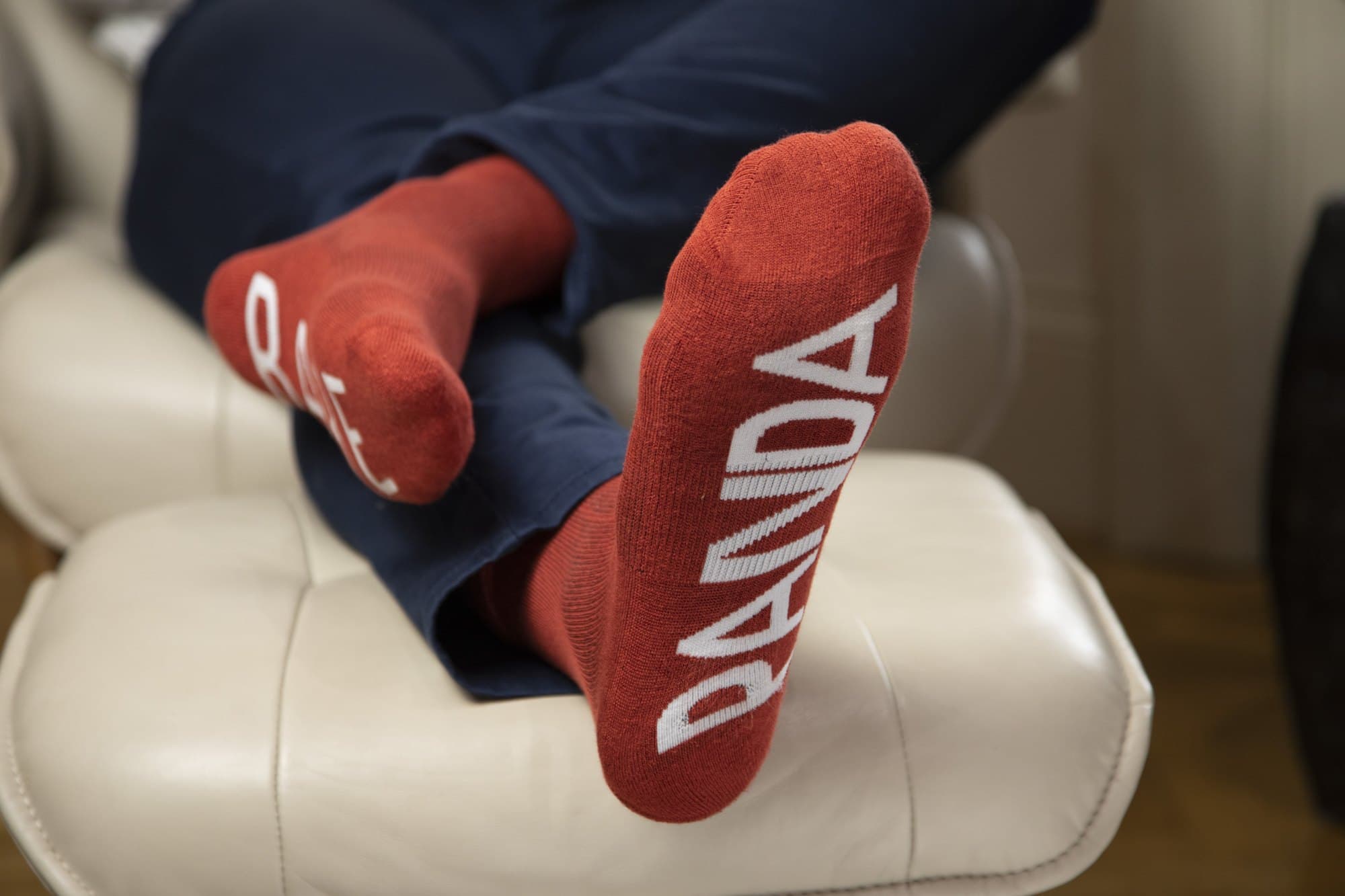
The best socks for sweaty feet are thin, breathable and made from moisture-wicking fibres like bamboo viscose or merino, not thick cushioned ones. Thickness adds padding, not airflow. What actually keeps feet dry is a fibre structure that pulls sweat away from skin and lets it evaporate, which is why a thin bamboo sock can outperform a thick cotton one.
If you've ever peeled off a pair of thick "sports socks" to find your feet still damp, you've felt this problem firsthand. It's a common assumption: more sock equals more absorption equals drier feet. The research and the podiatry advice both say otherwise.
Why do feet sweat so much in the first place?
Feet carry one of the highest concentrations of sweat glands on the body, around 250,000 between both feet. Add a closed shoe with limited airflow, and that moisture has nowhere to go.
For most people, this is simply biology meeting bad conditions: hot weather, a full day in boots, or a gym session. For others, it's a diagnosable condition. According to Healthdirect Australia, around 4 in every 100 Australians live with hyperhidrosis, sweating heavily with no obvious trigger like heat or exercise.
Specifically for feet, the Australasian College of Dermatologists notes that plantar hyperhidrosis affects an estimated 1 to 3 percent of the population, usually starting in childhood or adolescence. Whether you're in that group or just dealing with an Australian summer in closed shoes, the fix starts with what's on your feet.
Is bamboo breathable enough for sweaty feet?
Bamboo viscose has an open, rounded fibre structure that moves moisture along its surface efficiently. Independent comparative studies on regenerated bamboo, cotton and viscose rayon fabrics have found bamboo performs favourably on comfort properties like moisture absorption and air permeability compared with cotton (ScienceDirect, comparative study on polyester/bamboo blends).
Cotton, by contrast, absorbs moisture readily but releases it slowly. That's the core problem: cotton holds sweat against your skin instead of moving it on. Once cotton socks get damp, they stay damp, which is exactly the environment odour-causing bacteria prefer.
Bamboo's smoother fibre surface also means less friction against skin, which matters if you're prone to blisters or irritation on long days. If your feet run sensitive as well as sweaty, this is worth reading alongside our guide on bamboo socks and sensitive skin.

Does sock thickness actually matter for sweaty feet?
Thickness and breathability are two different jobs. Thickness is about cushioning and warmth. Breathability is about how fast moisture vapour can pass through the fabric and escape.
A thick sock built from a dense, tightly packed synthetic can trap both heat and moisture, leaving feet hotter and damper by the end of the day. A thinner sock in an open, breathable knit lets vapour move through more freely, even though it feels less "substantial" in the hand.
This is the myth most sock marketing leans on: that a heavier, more cushioned sock must be doing more work. For sweat management specifically, it's the fibre and the knit structure doing the work, not the padding.
| Fibre | Moisture handling | Breathability | Best suited for |
|---|---|---|---|
| Bamboo viscose | Absorbs and wicks moisture along the fibre surface, dries relatively quickly | High, cooling hand feel | Everyday wear, Australian heat, sensitive skin, gym |
| Merino wool | Absorbs moisture into the fibre core, regulates temperature | High, but warmer than bamboo | Hiking, cold climates, temperature swings |
| Cotton | Absorbs moisture but releases it slowly | Low once damp | Not recommended for consistently sweaty feet |
| Synthetic (polyester/nylon blends) | Wicks moisture to the surface but doesn't absorb it | Varies widely by weave, often lower | Budget sportswear, best in a technical wicking weave |
Are bamboo socks good for sweaty feet compared with merino?
Both fibres are genuine options, and neither is a gimmick. The difference comes down to climate and how each fibre handles moisture.
Merino wool absorbs moisture into the core of the fibre itself and is well regarded for temperature regulation in both hot and cold conditions, which is why it's a hiking and outdoor staple. Bamboo viscose wicks moisture along the fibre surface and tends to feel cooler and lighter against skin, which suits Australian conditions where the challenge is usually heat rather than cold.
If you want the full side-by-side, we've covered it in more depth in bamboo vs merino wool socks. For everyday Australian wear, from summer commutes to closed workboots, bamboo's lighter hand feel tends to win out. For alpine hikes or genuinely cold conditions, merino has the edge.
What about foot odour, not just sweat?
Sweat itself is close to odourless. The smell comes from bacteria breaking down that moisture on your skin and inside your shoes. Fabrics that let sweat evaporate quickly starve those bacteria of the damp environment they need to multiply.
This is one reason bamboo and merino socks are marketed as odour resistant. It's not that the fibre kills bacteria on contact, it's that a drier sock is a less hospitable one. We go into the full mechanism, including why some feet smell worse than others, in why your feet smell.
Healthdirect's general sweat management advice applies directly here: keep the area as dry as possible, and change socks at least twice a day if you're dealing with excessive sweating. That's a simple habit that does more than any single sock purchase.
Do socks alone fix sweaty feet, or does shoe choice matter too?
Socks are half the equation. Shoes are the other half.
A breathable sock inside a non-breathable synthetic shoe still traps moisture, just more slowly. Leather, mesh panels and rotating between two pairs of shoes so each pair fully dries between wears all help. If your feet stay damp all day in closed footwear for work, our guide on work socks for all-day comfort covers pairing sock choice with typical Australian workwear.
A simple checklist for sweaty feet
- Choose bamboo or merino over cotton for daily wear.
- Don't judge a sock by its thickness. Check the fibre and knit instead.
- Keep a spare pair on hand and change at midday if you're prone to heavy sweating.
- Rotate shoes so each pair gets a full day to dry out.
- If sweating is heavy, sudden, or affecting your daily life beyond normal heat and activity, it's worth mentioning to your GP. It could be plantar hyperhidrosis, which has recognised treatment options.

Small daily habits add up here. The right sock is a foundation, not a fix on its own, but it's the easiest variable to change today. PandaBare's bamboo crew socks use the same breathable, moisture-wicking fibre discussed above, built for Australian conditions rather than alpine ones.
FAQ
Are bamboo socks good for sweaty feet? Yes. Bamboo viscose fibres absorb and move moisture away from the skin more effectively than cotton, so feet stay drier through the day. Bamboo also has a naturally smooth fibre structure that resists the bacterial buildup that causes odour, though no fabric is antibacterial on its own once sweat and bacteria are already present.
Do thicker socks make sweaty feet worse? Thickness and breathability are not the same thing. A thick sock in the wrong fibre traps heat and slows moisture from reaching the outer air, while a thin sock in an open, moisture-wicking knit can move sweat away faster. Padding helps with cushioning and blister prevention, not with keeping feet dry.
Why do my feet sweat so much more than the rest of my body? Feet have among the highest concentration of sweat glands on the body, and closed shoes trap that moisture with little airflow. For most people this is normal. For some it is plantar hyperhidrosis, a recognised condition affecting an estimated 1 to 3 percent of people, according to the Australasian College of Dermatologists.
How often should I change socks if I have sweaty feet? Healthdirect Australia recommends changing socks at least twice a day if you have excessive foot sweating. Keeping a spare pair at work or in your bag makes this easier, especially in Australian summer or in closed workboots.
Is merino wool better than bamboo for sweaty feet? Both manage moisture well but suit different conditions. Merino regulates temperature across hot and cold extremes and is favoured for hiking and cold climates, while bamboo viscose has a cooler, lighter hand feel that many people prefer for Australian heat, everyday wear and sensitive skin.