Do sleep masks actually improve sleep? What the research says
Do sleep masks actually improve sleep? Here's what real studies, including an ICU trial and a Cardiff University sleep lab, found.
Yes, for most people, a sleep mask modestly improves sleep quality, and the evidence is stronger than you might expect. A 2015 ICU trial and a 2023 Cardiff University sleep study both found real, measurable benefits. The effect is biggest if your room isn't fully dark to begin with, which describes most Australian bedrooms during daylight saving.
That's the short answer. The longer answer involves an intensive care ward in China, a sleep lab in Wales, and a decades-old debate about whether light can reach your brain through closed eyelids. Here's what's actually been tested, what hasn't, and where the honest limits of the evidence sit.
Do sleep masks actually improve sleep quality?
The best evidence comes from two very different settings: hospitals and sleep labs.
In a 2015 randomised controlled trial published in Critical Care, 50 cardiac surgery patients were split into two groups after their operation. One group slept with earplugs, an eye mask and 30 minutes of relaxing music. The other didn't. The intervention group reported significantly better sleep depth, fewer awakenings, and easier return to sleep after waking.
A larger 2021 systematic review and meta-analysis in Frontiers in Psychiatry, pooling data from more than 2,000 critically ill patients across multiple trials, concluded that eye masks, alone or combined with earplugs, were the most effective non-drug intervention for improving sleep quality in intensive care settings. ICU wards are loud and constantly lit, so this is close to a worst-case sleep environment, which makes the result meaningful but also means it may overstate the benefit for someone sleeping in an already-quiet, mostly dark bedroom at home.
Outside hospitals, a 2023 study from Cardiff University's Brain Research Imaging Centre, published in the journal Sleep, tested 89 healthy adults aged 18 to 35 wearing an eye mask nightly for a week versus a week without one. The mask group showed better episodic memory encoding the next day and higher alertness, an effect linked to more time spent in slow-wave sleep. It's a well-designed study (pre-registered, power-calculated), but the sample was young, healthy adults over one week, not people with insomnia or older adults, so it doesn't tell us how far the benefit generalises.
Can light really get through your eyelids while you sleep?
This is the part most sleep mask articles skip, and it's more nuanced than "light is bad."
Older research, including a 1998 study in Biological Psychiatry, found that 2000-lux light could suppress melatonin even with eyelids closed. A later 2012 study published in BMC Research Notes found that specific wavelengths (blue and green light) delivered through closed eyelids suppressed melatonin by 36 percent early in the night, 45 percent mid-sleep, and 56 percent toward morning.
But the picture isn't uniform. An earlier trial found that ordinary light exposure with eyes closed decreased salivary melatonin in only 2 of 8 volunteers, with no significant average effect. The difference seems to come down to wavelength and intensity: narrow-band blue or green light at meaningful brightness has a measurable effect, while typical ambient white light at low levels may not.
Practically, this matters most for two situations: streetlight or hallway light leaking into a room, and the early morning glow that arrives well before an alarm, especially during Australian daylight saving months (October to April) when sunrise creeps earlier relative to typical wake times.
What the evidence actually supports vs what's anecdotal
| Claim | Evidence level | What the research actually shows |
|---|---|---|
| Sleep masks improve self-reported sleep quality | Supported | RCTs in ICU and general adult populations show consistent, moderate improvements (Critical Care, 2015; Frontiers in Psychiatry meta-analysis, 2021) |
| Sleep masks improve next-day memory and alertness | Supported, but limited scope | One well-designed 2023 Cardiff study in healthy 18 to 35 year-olds over one week (Sleep, 2023) |
| Light through closed eyelids affects melatonin | Partially supported | True for specific wavelengths and intensities, inconsistent for typical low-level ambient light |
| Sleep masks lower cortisol | Mixed | Some ICU studies show melatonin and cortisol improvements; the 2015 cardiac surgery trial found no significant hormonal difference despite better reported sleep |
| Sleep masks "fix" insomnia | Not supported | No trial has tested masks as a standalone insomnia treatment; they are a light-blocking aid, not a clinical intervention |
| Silk vs cotton vs bamboo mask fabric changes sleep outcomes | Anecdotal only | No published trial compares fabric type; comfort and fit likely matter more than material for actual sleep effect |
Who benefits most from wearing one?
The research points to a few groups where the effect is likely to be largest, simply because their baseline light exposure is worse.
- People sleeping in rooms without proper blackout curtains, including apartments with north or east-facing windows that catch early sun.
- Shift workers sleeping during daylight hours, where a mask is one of the few practical tools for replicating night-time darkness.
- Travellers on planes or in unfamiliar hotel rooms, where cabin lighting or gaps in curtains are common (see our guide on how to sleep on a plane in economy).
- People already doing the rest of the basics, like a consistent wind-down routine, since a mask does little if the rest of the sleep environment is working against you (our 15-minute wind-down routine covers what actually helps before you reach for a mask).
If your bedroom is already close to true blackout, the added benefit will be smaller. That's worth being honest about rather than promising universal transformation.
What are the real limitations of this evidence?
Three things temper how confidently anyone should talk about sleep masks.
First, sample sizes are modest. The Cardiff study's main experiment had 89 participants; the cardiac ICU trial had 50. These are reasonably sized studies for sleep science, but they're not the thousands-strong trials you'd want before making sweeping claims.
Second, most outcomes are self-reported. Participants rated their own sleep quality using questionnaires, which is standard practice but less objective than polysomnography (the gold-standard sleep lab measurement using brainwave sensors). The Cardiff study did use objective EEG-based sleep staging, which strengthens that particular result.
Third, most trials ran for a single night or a single week. Long-term data on nightly mask use over months or years doesn't really exist yet. That doesn't mean there's a problem with extended use, it means nobody has formally tested it.
None of this undermines the core finding. It just means "sleep masks help" is a reasonably well-supported, modest claim, not a guarantee.
How do you actually get the benefit at home?
Given what the studies tested, the practical takeaways are simple.
- Choose a mask with a contoured shape so it doesn't press directly on your eyes or eyelashes.
- Check the strap is adjustable enough to stay put without pulling tight across your ears, particularly if you sleep on your side.
- Pick a breathable fabric. Bamboo-blend fabric is soft against the skin and doesn't trap heat the way some synthetic masks do, which matters if you also run warm overnight (our guide on why bamboo feels cooler or warmer explains the mechanism).
- Pair it with the basics: a properly dark room where possible, and a consistent bedtime. A mask compensates for light, not for an inconsistent routine.
If you're building this into a broader wind-down setup, our guide on what to look for in a sleep mask goes deeper on fit and fabric choice. For Australian summers specifically, when early sunrises and warm nights both work against good sleep, see how to sleep better in Australian summer.
A sleep mask by itself won't undo a bad routine or a genuinely disrupted circadian rhythm. But the research on light-blocking specifically, across a hospital ward and a university sleep lab, lands in the same place: less light reaching your eyes at night is consistently linked to better reported sleep and, in at least one solid study, measurably better next-day function. That's a modest, well-evidenced claim, not a sweeping one, and it's the one we'd stand behind.
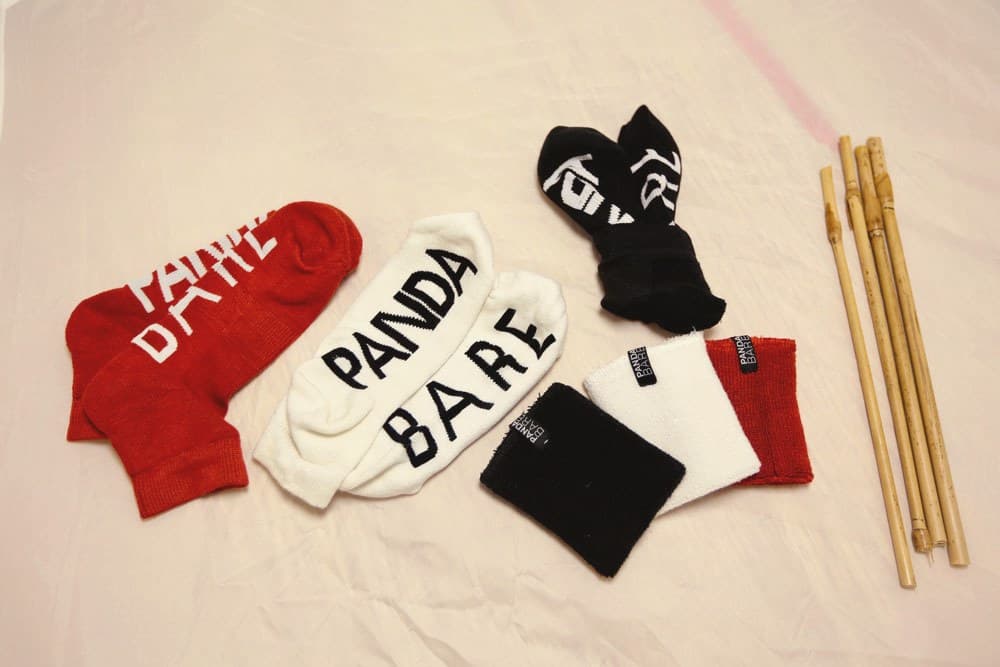
The PandaBare sleep mask is designed around that same brief: block light properly, sit comfortably, and use a fabric that doesn't overheat. It's part of the PandaBare Comfort Kit, alongside the travel pouch and bamboo socks, for anyone building a proper wind-down or travel sleep setup. You can also find it on its own at /products/sleep-mask.
FAQ
Do sleep masks actually improve sleep quality? For most people in a lit or partly lit room, yes, modestly. Randomised trials in hospital and lab settings show better self-reported sleep quality and, in one study, improved memory and alertness. The effect is smaller for people already sleeping in a genuinely dark room.
Can light really affect sleep through closed eyelids? Yes, though it depends on the light. Research has found that certain wavelengths, particularly blue and green light, can suppress melatonin by 36 to 56 percent even with eyes shut, while standard dim white light shows weaker and less consistent effects.
Do sleep masks help shift workers sleep during the day? A sleep mask is one of the more practical tools shift workers have, because it addresses the biggest daytime sleep disruptor: light. It will not fix a disrupted circadian rhythm on its own, but paired with blackout curtains and a consistent wind-down routine it removes one major variable.
Is there any downside to wearing a sleep mask? The main downsides are practical rather than medical: a mask that is too tight can press on the eyes or smudge overnight skincare, and a poor-quality strap can slip off. Choosing a contoured, breathable mask in a soft fabric largely avoids both issues.
What does the evidence not tell us about sleep masks? Most studies rely on self-reported sleep quality rather than objective measures like polysomnography, and sample sizes are often under 100 people. The research points in a consistently positive direction, but it is not the same weight of evidence behind something like CBT-I for insomnia.